



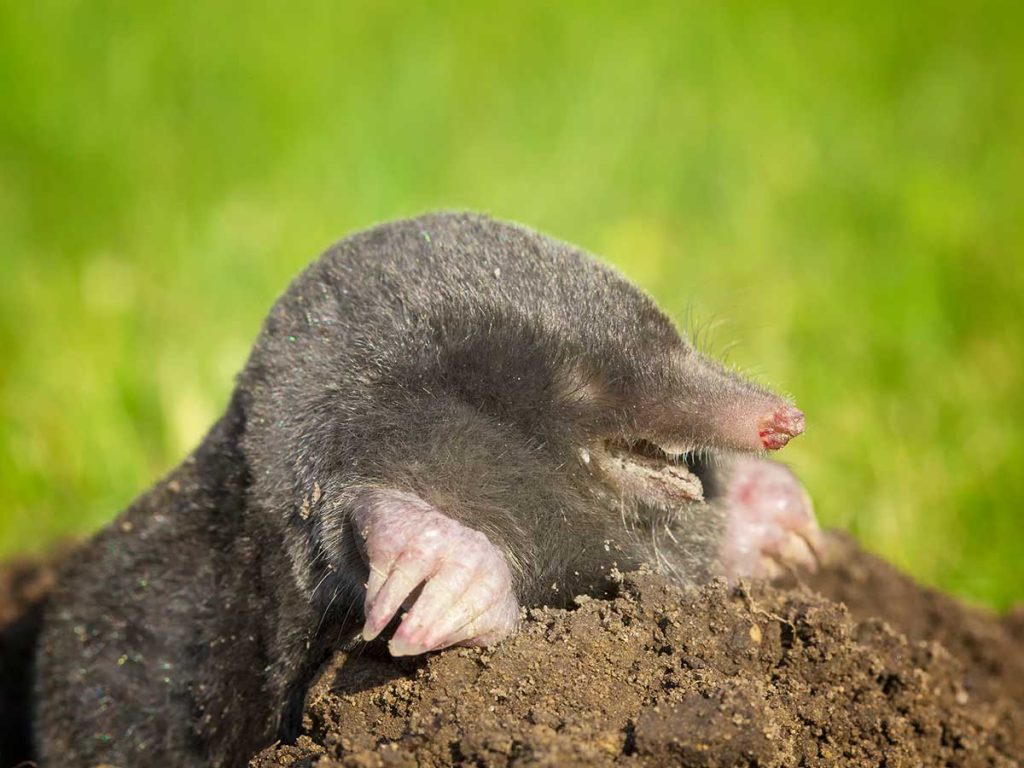
Moles are rodents that live underground, burrowing tunnels and caverns in their search for food. Reaching only four-11 inches in length, moles are small; however, they can cause significant property damage when they dig. If your Polk County property has been overrun by moles, the professionals at Critter Control® of Polk County are here to help.
5 Signs of Moles in Your Yard
It’s easy to spot moles if they have infiltrated your lawn or backyard. Some common signs include:
- Raised mounds of dirt, called mole holes
- Raised ridges in a crisscross pattern
- Areas of loose soil
- Discolored or dead patches of grass
- Excessive weeds growing in your yard
As soon as you notice signs of moles on your property, call the professionals at Critter Control® of Polk County. Moles can ruin your landscaping in a short amount of time. The sooner you notice signs of an infestation, the sooner it can be dealt with.
Safe and Humane Mole Removal Practices
Several DIY mole removal methods involve poisons and chemicals that are both dangerous and inhumane. At Critter Control® of Polk County, our licensed professionals use non-toxic and eco-friendly methods that keep your safety and the health of the animal in mind. Our four-step removal process includes:
- Inspection – We conduct a thorough inspection of your property to locate the moles.
- Removal – All nuisance moles are removed from your property using safe and humane methods.
- Prevention – Your property is safeguarded from future mole infestations.
- Restoration – Damages caused by the moles are restored to their original condition.
Don’t let moles overtake the landscaping around your home or business. Rely on our professional team of experts to keep your yard healthy and mole-free.
Expert Polk County Mole Removal Services
At Critter Control® of Polk County, we are experienced and equipped to remove mole infestations in Auburndale, Bartow, Davenport, Haines City, Lake Wales, Lakeland, and Winter Haven.
If your Polk County property is overrun with nuisance moles, then rely on our licensed and trained mole removal experts. To schedule an inspection of your home or business and receive a free mole removal estimate, call us today at 863-204-2815.
Mole Removal (Frequently Asked Questions)
Can my lawn recover from mole damage, or is it permanent?
Lawn damage from moles is usually temporary. With professional repair, reseeding, and proper care, grass can regrow over tunnels. Early intervention reduces the recovery process and restores soil structure effectively, minimizing long-term damage.
Do mole tunnels usually belong to just one animal, or are several working underground?
Moles are mostly solitary, so most tunnel systems belong to a single animal. Networks may appear extensive, giving the impression of multiple moles. During breeding season, temporary interactions between males and females may occur.
Why do many store-bought mole repellents and traps fail in Florida yards?
DIY repellents often fail due to Florida’s sandy soil, high water tables, and moles’ underground lifestyle. Improper trap placement and insufficient penetration of chemicals mean moles rarely encounter treatments, making professional methods far more effective.
Can mole tunnels harm underground sprinklers, pipes, or cables?
Mole tunnels rarely puncture pipes directly but can loosen soil, causing settling or shifting that stresses connections, potentially leading to leaks or breaks. Professionals should inspect areas near utilities to prevent long-term damage.
How can experts tell mole damage apart from other burrowing animals like voles or gophers?
Moles create raised, volcano-shaped mounds with serpentine ridges. Voles leave shallow open paths, and gophers make horseshoe-shaped mounds with plugged entrances. Soil texture and mound shape allow experts to accurately identify the culprit.
Does mole activity increase at certain times of year, and should that affect when I act?
Mole activity peaks in spring and fall due to moist soil and abundant food, but they remain active year-round in mild Florida climates. Immediate action prevents further lawn damage and ensures more effective removal.
After moles are removed, will tunnels completely stop showing up?
Old tunnels may remain until soil settles and grass regrows. New tunneling stops once all moles are removed and exclusion is applied. Without prevention, other moles may occupy existing tunnels, so professional services include long-term protective measures.
What homeowner habits accidentally attract moles to a yard?
Overwatering, heavy mulching, compost piles, lush fertilized grass, and leftover food attract moles’ prey like earthworms and grubs. Adjusting lawn care and reducing attractants makes your yard less appealing to moles.
Once fresh molehills appear, what’s the first step I should take to protect my lawn?
Call Critter Control® of Polk County at 863-204-2815 for inspection. Avoid disturbing molehills, document damage, reduce irrigation, and let professionals create a safe, effective plan. DIY removal often worsens the problem.