



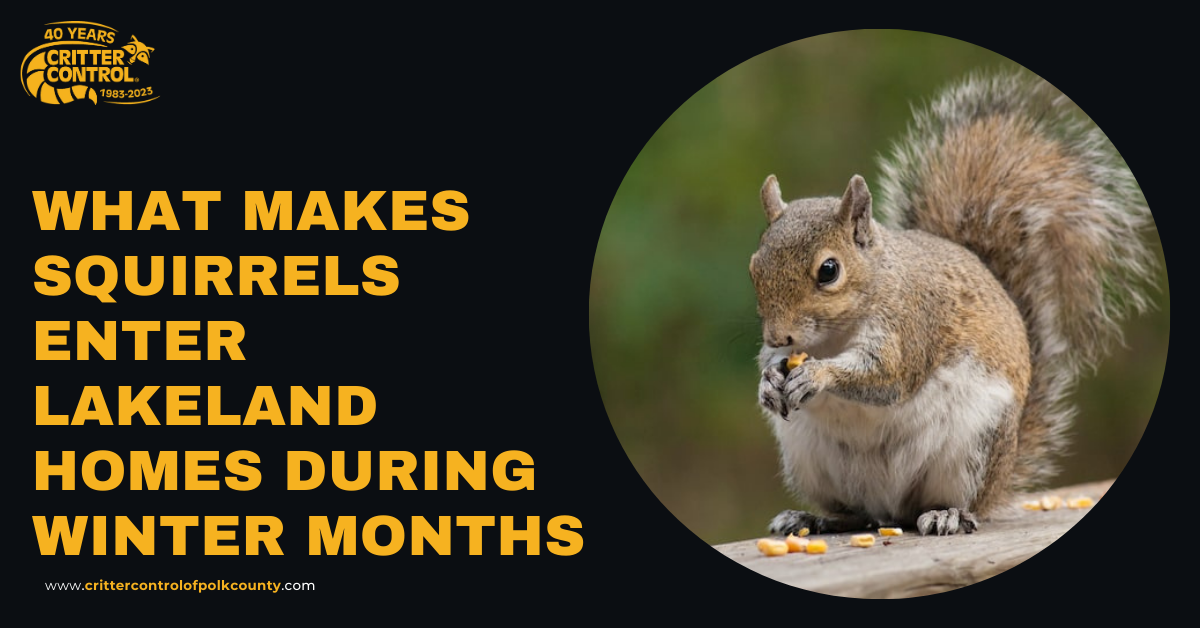
Squirrels are often found entering homes during the winter months in Lakeland, Florida. Your home provides a safe place for these animals to find warmth, nesting materials, and a safe route to access other areas of your house through your attic or crawl space; you probably haven’t even thought about this.
Why Squirrels Enter Lakeland Homes in Winter
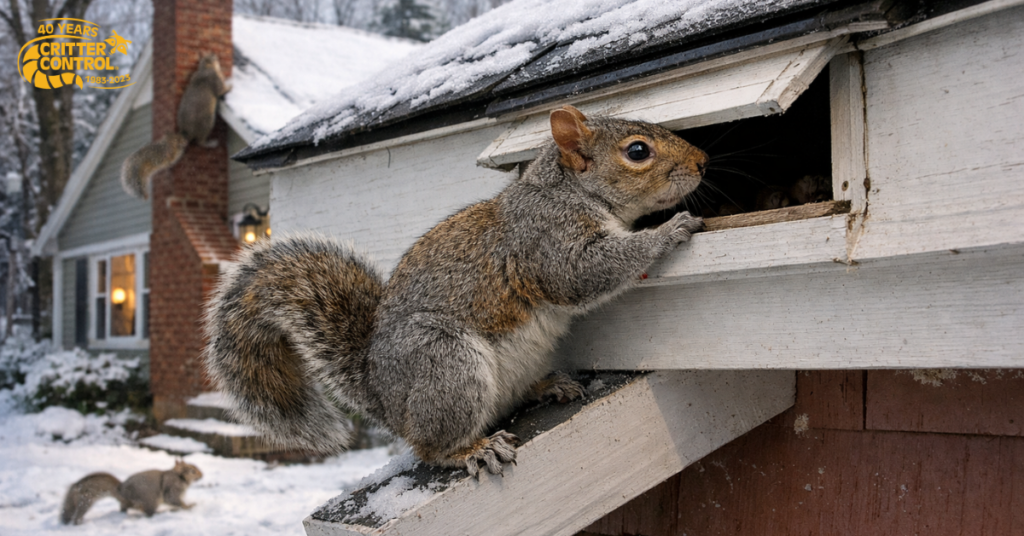
Unlike a tree, with its wind and rain protection, your attic provides a stable environment for a nest all year round, often leading to the need for squirrel removal from attic spaces.
2. Electrical Wiring as a Chewing Magnet
All rodents use their teeth to keep them sharp, and in many cases, by chewing on electrical wiring, squirrels can damage the insulation. These damaged wires can create a fire hazard as stated by the Centers for Disease Control and Prevention, making squirrel pest control a safety priority.
3. Ventilation Systems Create “Wildlife Highways”
Roof vents, ducts, and attic fans serve as open pathways that squirrels can easily take advantage of to enter. These covert routes enable them to swiftly move through the house structure without being seen, often requiring professional squirrel removal services.
4. Stored Items Provide Nesting Material
Attics filled with boxes, fabric, and insulation are torn apart to make bedding for nests. This way not only damages the property but also leaves dirty waste behind.
5. Breeding Cycles Drive Winter Entry
It has been quite common for squirrels in Lakeland to breed in winter, and after that, pregnant females look for quiet, enclosed spaces where they can give birth to litters. The attic is their nursery since it is safe and away from both predators and the weather, highlighting the importance of timely squirrel pest control.
Humane, Preventative Wildlife Removal
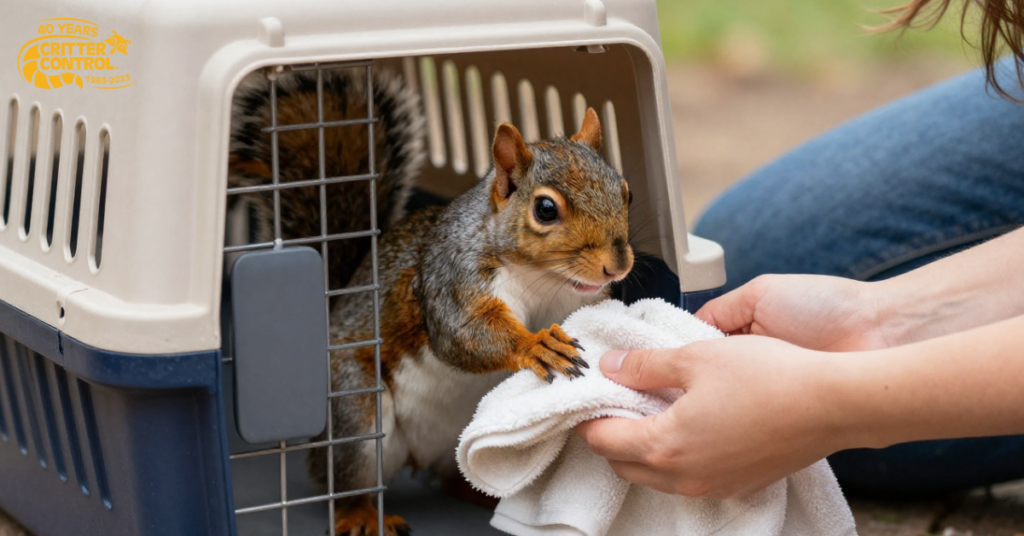
Wildlife removal goes beyond just getting animals out of the house. It is also about protecting property and health, and respecting the role of wildlife in the ecosystem. A humane, preventative approach involves safe removal as well as long-term strategies that solve problems permanently.
- Humane Removal – Livetrapping and moving methods can be used to make sure that squirrels are treated well and without injury during the process.
- Exclusion – Closing vents, soffits, and ducts will stop the animals from getting back in by sealing off the “wildlife highways” that squirrels use to get around.
- Cleanup – Removing droppings, nesting materials, and damaged insulation helps eliminate health hazards and makes the area safe again.
Before breeding cycles start, the exteriors of buildings that are prone to attack are strengthened so as to lessen the chances of another infestation.
Professional vs. DIY Squirrel Pest Control
Here’s a quick comparison between both
| Factor | Professional Wildlife Removal | DIY Attempts |
| Knowledge of Breeding Cycles | Experts anticipate seasonal entry patterns | Limited awareness |
| Handling Wiring Risks | Safe removal + repair | Risk of fire/electrical shock |
| Ventilation Exclusion | Specialized sealing methods | Often overlooked |
| Humane Relocation | Ethical, eco-conscious | May lack humane practices |
| Long-Term Prevention | Inspection + reinforcement | Temporary fixes |
Decision Logic for Homeowners
When it comes to getting squirrels out of your attic
Safety First – Professional help can minimize the hazards associated with wiring, ladder use and animal droppings.
Hidden Entry Points – Squirrels often get in through the vent and soffits areas, which only a pro can properly close for you.
Breeding Awareness – You should deal with your infestation before the new babies are born if you want to avoid a bigger problem
Humane Responsibility: Relocation ensures the animals are treated ethically.
Signs of a Squirrel Infestation
If you’ve ever heard some scratchy noises coming from your ceiling or noticed some small bits of insulation lying around, it’s possible you could be sharing your home with squirrels. They are smart and persistent, and when they manage to get in, they leave behind different signs which can be easily noticed by anyone who knows how to find them.
1. Strange Noises at Dawn or Dusk
Squirrels are mainly active during the early morning and late afternoon. When you hear running, scratching, or even the dropping of nuts in the attic, this is probably the strongest indication that they are there.
2. Chewed Wires and Wood
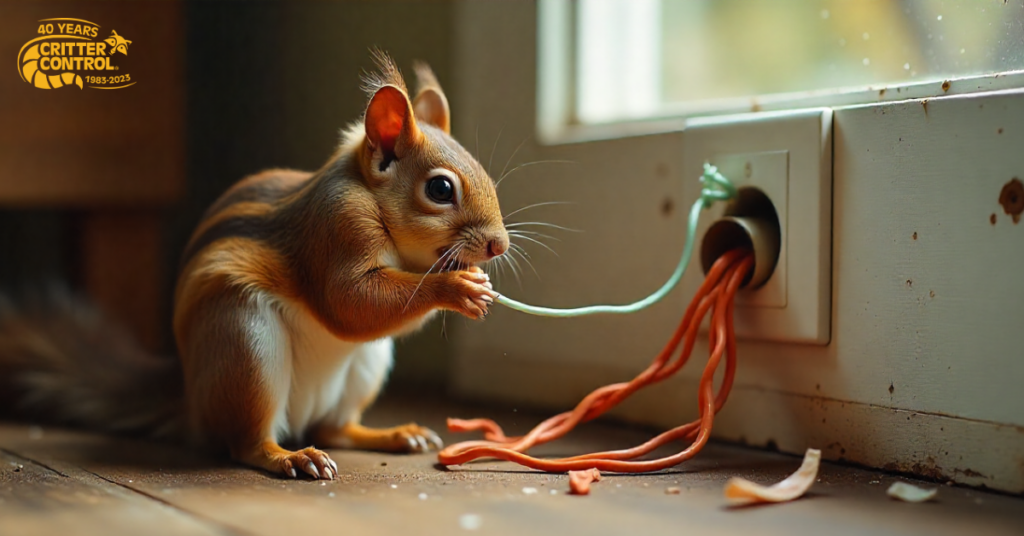
Their teeth are constantly growing which is why squirrels cannot stop nibbling. They can be particularly dangerous when they damage electrical wires, insulation or gnaw wooden beams. Hence, these signs do indicate their presence but the biggest problem here is safety.
3. Droppings and Odors
Squirrel droppings are very similar to tiny, dark pellets. Gradually, these accumulations give rise to strong smells. Urine may also penetrate insulation, resulting in a damp smell that stays there for quite a while.
4. Shredded Nesting Materials
Whatever the case, it would be quite a shock if you found your attic cardboard boxes, clothes, or insulation torn apart. Squirrels tear up these things to create nests made of soft materials, which are generally concealed in corners or behind stored items.
5. Visible Entry Points
Have a look at your roofline, soffits, and vents. Fresh bite marks, loose shingles, or openings around ducts frequently suggest that squirrels have broken into your house through the door they made there.
Wrap‑Up
Squirrels do not only enter into the houses in Lakeland in winter looking for warmth, their breeding cycles, desire to chew, ventilation pathways, and stored nesting materials also attract them. While DIY squirrel pest control may ignore these secret reasons, professional animal removal services of Critter Control of Polk County offer animal friendly, preventive solutions that not only save the house but also keep the occupants healthy.