

Key Takeaways
- Removing wildlife from a home addresses the immediate intrusion, but it may not resolve how the animal got inside.
- Roof edges, soffits, vents, gaps, and other exterior openings can provide access to attics and enclosed areas.
- A wildlife inspection can help connect signs inside the home with the exterior conditions that may have allowed an animal to enter.
- Exclusion is most useful when it addresses the access points associated with the wildlife problem rather than sealing openings at random.
- Cleanup, sanitization, or wildlife-related restoration may also be needed after an animal has been removed.
A squirrel is removed from the attic. The scratching stops, and for a while, the homeowner assumes the problem is over. Then another animal turns up a few weeks or months later.
That does not necessarily mean the first animal somehow found its way back. The property may still offer an accessible route into the attic.
This is one reason wildlife exclusion in Polk County needs to be considered alongside removal. Getting the animal out deals with what is happening now; finding out how it entered can help address the conditions that allowed the problem to occur in the first place.
What Allows Wildlife to Get Back Inside?
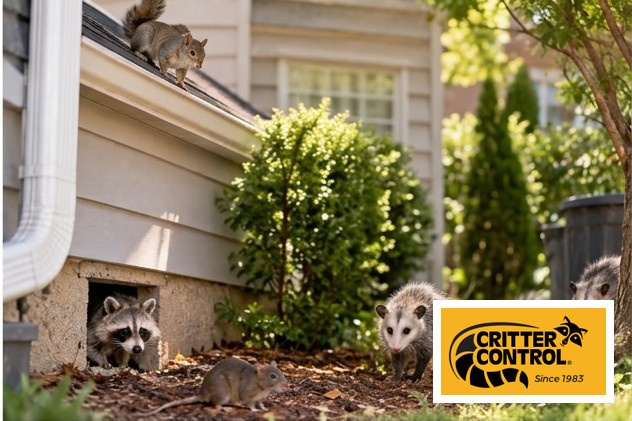
Animals can take advantage of openings that are easy to miss during a quick look at the house. A gap around a soffit, an opening near an attic vent, or damage along part of a roof edge may provide access without being particularly obvious from the yard.
Potential access areas include:
- Roof edges and soffits
- Attic vents
- Fascia and other exterior components
- Gaps where different building materials meet
- Damaged or loose exterior materials
- Openings around exterior penetrations
The condition of the property also matters. Polk County includes established residential neighborhoods, newer construction, rural properties, and areas near agricultural land. An older home may have exterior components that have changed or deteriorated over time, while a newer property can have its own construction-related vulnerabilities.
There is no single entry-point checklist that applies equally to every house.
Removal Does Not Explain How the Animal Got In
Wildlife removal in Polk County is often the first thing a homeowner thinks about, especially after hearing scratching or movement overhead. But once the animal is gone, there is another question worth asking: where was the access point?
That answer may not be obvious. A homeowner could find evidence of activity near one side of the attic while the actual exterior opening is located somewhere else. Traces such as disturbed insulation, nesting material, droppings, or damage can provide useful clues, but they do not necessarily identify the entry route on their own.
A property inspection puts those clues into context.
What Happens During a Wildlife Inspection?
A wildlife inspection in Polk County should involve more than looking at the most noticeable hole and calling it the entry point.
The property can be checked for signs of current or previous wildlife activity, accessible exterior areas, attic conditions, and locations where an animal may have gained access. If there is more than one possible opening, the surrounding evidence can help determine which areas deserve closer attention.
For a homeowner, this distinction is useful. Finding a gap is one thing; establishing whether that gap is connected to the wildlife problem is another.
An inspection can also reveal damage that was not obvious when the animal was still inside. That may include displaced insulation, nesting material, or other evidence requiring cleanup or further assessment.
Why Exclusion Comes After Removal
Once the wildlife situation has been appropriately handled, the identified access points can be evaluated for exclusion.
Wildlife exclusion in Polk County focuses on reducing opportunities for animals to enter through openings associated with the problem. That might involve a roof edge, soffit, vent, or another exterior location identified during the inspection.
Sealing every visible gap is not necessarily the right approach. Some openings may be unrelated to the intrusion, while others may require a different type of repair.
If an inspection reveals roofing, electrical, HVAC, or structural issues outside the scope of wildlife services, those portions of the work should be handled by an appropriately qualified contractor.
What About the Damage Left Behind?
The animal leaving the attic does not mean the attic has returned to its previous condition.
Insulation may have been disturbed, nesting material may remain, and droppings or other debris can be present in areas where the animal was active. Those conditions should be assessed before deciding that nothing else needs to be done.
Depending on the situation, wildlife-related cleanup, sanitization, or restoration may be appropriate within the scope of services. Addressing these conditions can also be important when the homeowner is trying to understand the full extent of the original intrusion.
In other words, there are two separate things to consider: how the animal got inside and what it left behind.
How Can Polk County Homeowners Reduce Repeat Problems?
There is no way to make a property completely inaccessible to wildlife, particularly in an area where residential, rural, and agricultural environments meet. Homeowners can, however, pay attention to the conditions that have already been associated with an intrusion.
If an inspection identifies an accessible roofline opening, addressing that access point is one part of the response. Keeping potential food sources secured and watching for renewed signs of attic activity can also help.
The Florida Fish and Wildlife Conservation Commission recommends securing attractants such as garbage, pet food, bird feeders, and other accessible food sources around homes.
The most useful prevention measures tend to come from what was actually found at the property. A homeowner whose squirrel problem began around a damaged soffit may have different concerns from someone dealing with repeated rodent activity around a detached structure.
When Should You Have the Property Inspected?
A recurring wildlife problem is a reasonable reason to look beyond removal. The same applies when scratching returns, a new animal is seen entering the attic, insulation appears disturbed again, or an opening has been discovered but its purpose is unclear.
The timing can matter, too. Waiting until another animal is inside may mean dealing with the same access problem all over again.
A wildlife inspection in Polk County can help establish what has changed, what remains vulnerable, and whether additional wildlife services are appropriate.
Addressing the Problem Beyond Removal
When wildlife repeatedly enters a home, treating each incident separately can leave an important part of the problem unexplored. Removal deals with the animal that is there; inspection and exclusion look at the property conditions behind the intrusion.
For homeowners in Polk County, that can mean assessing the attic, tracing signs back to possible access points, addressing appropriate wildlife entry areas, and considering cleanup or restoration afterward.
Critter Control of Polk County can assess wildlife-related concerns and help determine the appropriate next steps based on the conditions found during an inspection.
FAQs
A recurring problem may be connected to an accessible entry point or another condition around the property. Removing the animal does not necessarily change those conditions, which is why an inspection can be useful when activity returns.
Potential access areas include roof edges, soffits, attic vents, fascia, and gaps around exterior components. The relevant entry point depends on the property and should be evaluated in relation to the signs of wildlife activity.
Exclusion generally needs to be considered in relation to the wildlife situation. The appropriate timing and method depend on the animal, the entry point, and what the inspection finds.
Avoid attempting to handle the animal yourself. If wildlife activity returns, an inspection can help determine whether the original access point remains available or whether another part of the property is involved.
It depends on what the animal left behind. Disturbed insulation, nesting material, droppings, and other debris may require assessment, and cleanup, sanitization, or restoration may be appropriate based on the findings.